
I. Purpose & Scope
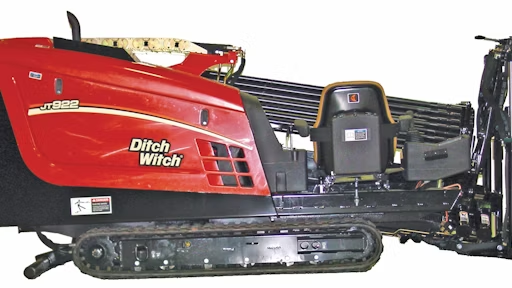
To safely and effectively provide instruction on the inspection and proper use of bore machines.
II. Definitions
Standard PPE – High Viz Garment, Hard Hat, Z-87.1 Safety Glasses, Gloves, Pants, Work Boots
III. Process
NOTE: Work instruction does not supplement the manual. For specific instructions for the exact model please refer to the owner’s manual.
A. Potential Hazards
- Electric Shock Hazard
- Moving Parts Hazard
- Burn Hazard
- Fire or Explosion Hazard
- Crushing Hazard
- Flying Objects Hazard
- Noise Hazard
B. PPE
- Standard PPE
- Hearing Protection
- Dielectric Boots and Gloves – Recommended
C. Inspection
- Check track tension and condition before startup.
- To adjust pump MPG into fitting until the length of the compressed spring.
- Drive straight forward one machine length and check tension against.
- Check fuel filter water separators before startup. Drain water at plug as needed.
- Check air filter indicator before startup. Change air filter elements when air filter restriction indicator reaches the red zone.
- Check engine oil at dipstick before startup. Check with unit on level surface. Add DEO at fill as necessary to keep oil level at highest line on dipstick.
- Check coolant level, with engine cool, at sight glass of expansion tank before startup. Maintain coolant level at halfway point on sight glass. If low, add approved coolant to fill.
- Check hydraulic hoses for leaks before startup.
- Check hydraulic fluid level before startup. Maintain fluid level at halfway point on sight glass, when engine is off and fluid is cool. Add THF at hydraulic fluid fill.
- Check fluid pump oil level at sight glass before startup. Add NDO at fill as needed to maintain level at halfway point on sight glass.
- Check piston seals for signs of excessive leakage before startup. Replace if leakage becomes excessive.
- Check control proximity switches before startup and clean or replace as needed.
- To test turn on the ignition switch to the on position. Do not start engine.
- Place metal object above target on each switch.
- If yellow LED on switch lights, switch sensor is working.
- Check pipe auto lubricator spray nozzle. Ensure that nozzle is free of obstructions and operates properly. Clean as needed.
- To clean rotate handle to the upward, or cleanout, position.
- Operate pump until obstruction is flushed.
- Rotate handle to the downward, or spray position.
- Clean nozzle guard. If necessary, pull handle/nozzle insert out of housing to clean with fine wire or solvent.
- Check pipe auto lubricator TJC level. Change pail as needed.
- Clean drilling fluid y-strainer. Ensure that strainer is free of debris.
D. Use
Lifting
- This machine is not configured for lifting. If the machine must be lifting, load machine into a container or onto a platform appropriate for lifting.
- Pipe Box lifting points are identified by lifting decals. Lifting at other points is unsafe and can damage machinery.
- The pipe box has 7 lift pin block holes.
- Use center hole to keep pipe box level for transporting pipe boxes and loading onto level drill frame.
- Use side holes to angle box for loading onto angled drill frame.
- Remove Pipe Box
- Install lift block and adjust to match drill frame angle.
- Remove pin form top of pipe box.
- Remove back pin and two front pins.
- Replace pin into top of pipe box.
- Move pipe box off of drill frame.
- Install Pipe Box
- Move pipe box over pipeloader and lower into position. Ensure pipe box is moved all the way to the front.
- Install back pin and two front pins.
- Use pin from top of pipe box to tighten threaded caps.
- Replace pin into top of pipe box.
- Remove lift block.
- Raise pipe with lifter on unit.
- Remove bottom support pins from both ends of pipe box. Store support in holes on top of pipe box.
- Remove Pipe Box
- Tiedown points are identified by tiedown decals. Securing to trailer at other points can damage machinery.
- Loop a transport chain around each tie down point.
Drilling
- Start system by inserting the key and turning the key clockwise.
- Run engine at low throttle for 5 minutes.
- Turn on drilling fluid.
- Visually check for drilling fluid flow.
- Turn drill bit to starting position.
- Slowly move carriage forward.
- Drill first pipe as straight as possible.
- Monitor gauges.
- Record bore path.
- Locate the drill head every half-length of pipe.
- As the job is complete, record the actual data for each drill pipe. List pitch and depth of each joint and a brief description of the procedure.
- Draw a simple sketch of the site and record the depth and rough location of pullback.
- Add pipe by pressing the top of the drilling unit throttle switch until engine is at full throttle.
- Enable automated pipeloader system
- To Add Pipe
- Open front wrench and retract shuttles for add pipe function to work.
- Press top of add pipe/manual/remove pipe switch. Green control cycle light will come on.
- Grippers will open, pipe will be lowered, and then green control cycle light will flash.
- Remove Pipe
- Open front wrench and retract shuttles for remove pipe function to work.
- Press bottom of add pipe/manual/remove pipe switch. Green control cycle light will come on.
- Grippers will open, pipe will be lowered and lifted off shuttles, and then green control cycle light will flash.
- To Add Pipe
- Break joint at SaverLok body.
- Manual Pipeloader Controls
- Clamp pipe when joint is between wrenches. Always clamp on the larger diameter areas on either side of the tool joint face.
- Locate drill head.
- Engage front wrench until pipe is clamped and pressure develops.
- Slowly move carriage back until movement stops.
- Slowly rotate spindle counterclockwise. Carriage will move back as threads separate.
- After threads are fully separated, stop rotation and move carriage to back of frame.
- Automated Pipeloader Control
- Clamp pipe when joint is between wrenches. Always clamp on the larger diameter areas on either side of the tool joint face.
- Locate drill head.
- Engage front wrench until pipe is clamped and pressure develops.
- Slowly move carriage back until movement stops.
- Slowly rotate spindle counterclockwise. Carriage will move back as threads separate.
- After threads are fully separated, stop rotation and move carriage to back of frame.
- While carriage is moving, green control cycle light will come on. Grippers will grip, pipe will be lubed, and then green control cycle light will flash.
- Manual Pipeloader Controls
- Load Pipe.
- Manual Pipeloader Controls
- Make sure shuttle stop is properly positioned on pipeloader and lift arms are completely lowered.
- Close grippers.
- Lube upper pipe threads.
- Move pipe to spindle and lube lower threads.
- Raise pipe in box.
- Automated Pipeloader Control
- Make sure shuttle stop is properly positioned on pipeloader.
- When carriage is moved to back of drill frame, press RESUME. Green control cycle light will come on.
- Pipe will be moved to spindle, front threads will be lubed, pipe in box will be lifted, and then green control cycle light will flash.
- Manual Pipeloader Controls
- Connect pipe to SaverLok Body.
- Manual Pipeloader Controls
- Always rotate clockwise unless breaking pipe joint. Rotating counterclockwise will separate joints.
- Move carriage forward until SaverLok body meets pipe.
- Continue to slowly advance carriage and rotate spindle until pipe threads tighten.
- Relax grippers.
- Automated Pipeloader Control
- Always rotate clockwise unless breaking pipe joint. Rotating counterclockwise will separate joints.
- Move carriage forward until SaverLok body meets pipe.
- Continue to slowly advance carriage and rotate spindle until pipe threads tighten.
- Press RESUME. Green control cycle light will come one.
- Grippers will relax and then green control cycle light will flash.
- Manual Pipeloader Controls
- Connect new pipe.
- Manual Pipeloader Controls
- Slowly move carriage forward and rotate spindle until pipe threads tighten.
- To fully torque joint, slowly rotate pipe until spindle stops turning.
- Open wrench.
- Open grippers fully.
- Retract shuttles against shuttle stop.
- Lower pipe lifters.
- Automated Pipeloader Control
- Slowly move carriage forward and rotate spindle until pipe threads tighten.
- To fully torque joints, slowly rotate pipe until spindle stops turning.
- Open wrench.
- Press RESUME. Green control cycle light will come one.
- Grippers will open, shuttles will retract, pipe lifters will lower, and then green control cycle light will flash.
- Manual Pipeloader Controls
- Press and hold quick fill fluid pump switch until pipe fills and fluid pressure begins to rise.
- Rotate spindle.
- Slowly move carriage forward. Adjust rotation speed control according to bit size and soil conditions.
- Engage and set cruise control as desired.
- Monitor gauges.
- Locate drill head with tracker at least every half-length of pipe.
- Drill remaining pipes in pipe box and correct direction as necessary.
- Add additional drill pipe to empty box to complete bore.
- Lower shuttle guard and shuttle cover.
- Move row select to fifth row.
- Move shuttles out fully.
- Press top of shuttle lockout switch to prevent shuttle operation.
- Remove hold pins on each shuttle and rotate auxiliary pipe loaders into position.
- Remove pipe stop (stored on outside of drill frame) and attach to front of pipe box.
- Load a pipe in auxiliary pipe loaders and rest it against pipe stop.
- Press bottom of shuttle lockout switch to allow shuttle operation. Move at least 10 feet away from drill.
- Move auxiliary pipe loaders under row 5.
- Raise pipe into row 5.
- Move shuttles all the way out.
- Repeat steps to load more pieces of pipe into row 5.
- Move pipe to pipeloader grippers.
- Raise last pipe into row 5.
- Move shuttles out.
- Lower pipe into front grippers.
- Before operating pipeloader:
- Close both auxiliary pipe loaders.
- Remove pipe stop and store it on shuttle guards.
- Step away from drilling unit.
- Surface drill head
- Guide drill head to target pit or up through surface. Make all bends gradual.
- Clean area around exit point.
- Turn fluid flow control to off position as soon as drill head emerges.
- Allow tracker operator to turn off tracker or use DrillLok to disable drilling unit thrust/pullback and rotation hydraulics. Tracker operator waits at least 16 seconds for green light to enter pit and change tools.
- Clean drill head especially around threats.
- Disconnect EZ-Connect joint or use quick wrench to remove drill head. Keep threads clean.
- Attach quick wrench in either the join or break position.
- Unbolt vise and place jaws around pipe.
- Bolt jaws of vise together.
- Place jaw around pipe, transition sub, or downhole tool.
- Pin handles to wrench jaws. Be sure handles are both up.
- Attach pivot nuts to wrench handles so that screw drive handle is over joint.
- To Join
- Scribe straight line across joint on both sides of separating line.
- Scribe second line on moveable side of joint in the opposite direction of tightening action away from the first line in the appropriate distance required.
- turn handle until second line meets first.
- Turn handle opposite direction two turns to relieve pressure.
- Remove quick wrench components.
- To Break
- Turn handle until joint is broken.
- Turn handle opposite direction two turns to relieve pressure.
- Remove quick wrench components.
Backreaming
- Assemble backream stream.
- Select backreaming devices.
- Determine fluid rate requirements and install appropriate nozzles to provide sufficient flow.
- Attach backreamer to beacon housing if tracking backream.
- Install beacon following beacon instructions for battery replacement and beacon positioning.
- Install beacon housing lid.
- Follow beacon instructions to check beacon operation.
- Follow tracker instructions to calibrate beacon.
- Use quick wrenches to attach transition sub to drill pipe string.
- Use quick wrenches to attach backreamer/beacon housing assembly to transition sub.
- Attach additional pullback devices or product to end of backreamer/beacon housing assembly.
- Start drilling unit and adjust throttle.
- Set drilling flow. Check that fluid flows through all nozzles.
- Without rotating, slowly pull back until reamer contacts bore hole opening. Do not lodge reamer in hole.
- Begin slow rotation and pullback.
- Increase drilling fluid flow and rotation as the backream string enters the ground.
- If tracking backream, tracker operator may continue tracking when the backream string is no longer visible.
- Remove extra drill pipe from pipe box to complete backream.
- Unload all drill pipe loaded with auxiliary pipe loaders. Pipe in fifth row of pipe box can be unloaded only when all other rows are empty.
- Lower shuttle guard and shuttle cover.
- Ensure fifth row is selected.
- Move shuttles out fully.
- Press top of shuttle lockout switch to prevent shuttle operation.
- Pull and hold pins on each shuttle and slide out auxiliary pipe loaders.
- Remove pipe stop (stored on outside of drill frame) and attach to front of pipe box.
- Press bottom of shuttle lockout switch to allow shuttle operation. Move at least 10 feet away from drill.
- Raise pipe in row 5.
- Move shuttles in.
- Lower pipe to auxiliary pipe loaders.
- Move shuttles out.
- Press top of shuttle lockout switch to prevent shuttle operation.
- Remove pipe form auxiliary pipe loaders and store properly.
- Repeat steps to unload remaining added drill pipe.
- After all added drill pipe is unloaded with auxiliary pipe loaders.
- Close both auxiliary pipe loaders.
- Remove pipe stop and store it on shuttle guard.
- Press bottom of shuttle lockout switch to allow shuttle operation. Move at least 10 feet away form drill.
- Finish loading remaining drill pipe into row 5 using standard procedure.
- Remove remaining pipe to complete backream.
- Remove pullback device.
- Remove Pipe
- Enable automated pipeloader system.
- Stop carriage when alignment pin becomes visible behind rear wrench.
- Clamp pipes.
- Break front joint.
- Turn rear wrench counterclockwise to break joint.
- Disengage rear wrench and rotate wrench clockwise.
- Grip pipe.
- Manual Pipeloader Controls
- Open grippers
- Lift pipe of shuttles
- Extend shuttles to spindle position.
- Close grippers. Leave grippers loose enough to allow pipe to rotate.
- Lower filters.
- Automated Pipeloader Control.
- Press RESUME. Green control cycle light will come on.
- Shuttles will extend, grippers will grip fully and relax open, pipe lifters will lower, and then green control cycle light will flash.
- Manual Pipeloader Controls
- Separate front joint.
- Slowly rotate spindle counterclockwise and move carriage back to separate pipe.
- Continue to move carriage back until pipe is properly positioned in rear wrench.
- Remove Pipe
Shut Down Unit
- Stop track movement.
- Lower drill frame and stabilizer to the ground.
- Run engine at low throttle for 3 minutes to cool.
- Turn ignition switch to STOP.
- Remove key.
E. Maintenance
- Check pipe auto lubricator TJC level and change pail as needed.
- To change pail remove wingnuts and bolts attaching base ring to pail cover.
- Rotate base ring slightly to clear hooks on cover and remove pail from cover.
- Remove follower plate from empty pail and install into new pail. Press firmly on follower plate until TJC comes up in center opening.
- Remove base ring from empty pail and install onto new pail.
- Install pail into place over pump dip tube. Use hooks on cover to support base ring.
- Install bolts and wingnuts.
- Remove cap from discharge tree on pump. Operate pump until discharged TJC is free of air pockets.
- Replace cap.
- Check pipeloader inserts at indicated areas for wear. Flip gripper inserts for longer wear or replace as needed.
- Check pipe guide inserts for wear. Rotate inserts for longer wear, or replace as needed.
- Check ball valve for leaks. Tighten stem packing as needed.
- Check track support slide pads. Replace as needed.
- Check wrench jaw inserts for wear and replace as needed.
- Change air filter when air filter service indicator reaches the red zone.
F. Live Line Contact
- Immediately stop work.
- Treat equipment, attachments and ground as energized.
- Warn people nearby that an electric strike has occurred.
- DO NOT exit equipment and stay inside cab while contact or arcing is occurring.
- Ensure equipment is barricaded.
- If there is an immediate hazard (i.e. fire hazard) that requires the exiting of equipment employee shall jump out of equipment with both feet together, landing on the ground.
- Employee shall than shuffle away from equipment, not walk or run, taking small steps and feet together to minimize voltage difference in the ground until they reach a safe location.