
I. Purpose & Scope
To safely and effectively provide instruction on the inspection and proper use of wheel chocks.
II. Definitions
Standard PPE – High Viz Garment, Hard Hat, Z-87.1 Safety Glasses, Gloves, Pants, Work Boots
III. Process
NOTE: Work instruction does not supplement the manual. For specific instructions for the exact model please refer to the owner’s manual.
A. Potential Hazards
- Moving Objects Hazard
B. PPE
- Standard PPE
C. Inspection
- Check for cracks, breaks or falling apart. Replace immediately if damaged.
D. Use
- When possible park vehicle on a level surface and set the parking brake.
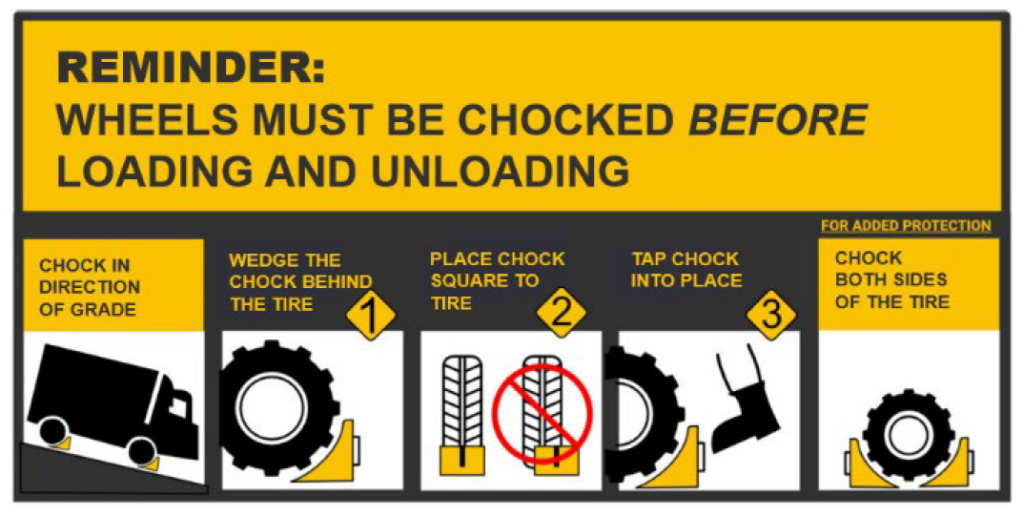
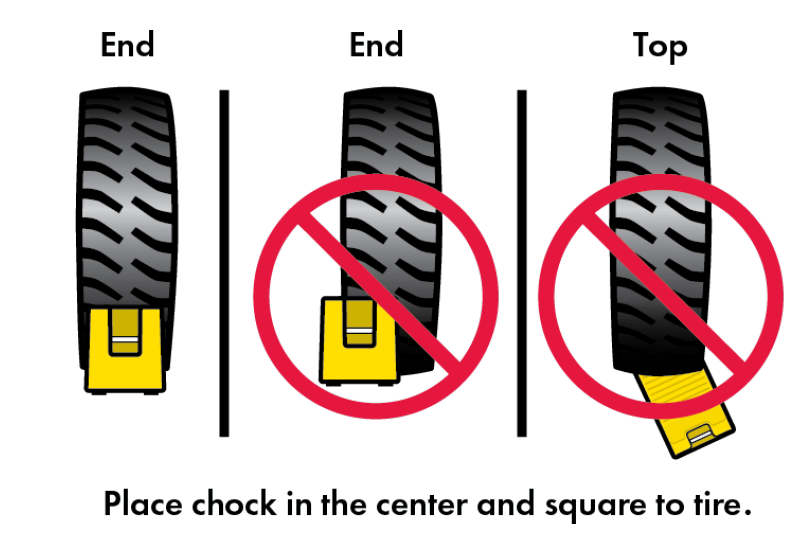
- Always use wheel chocks in pairs, and position the chocks snuggly against the center of tire against the tread.
- Wheel chocks must be positioned downhill and below the vehicle’s center of gravity.
- On a downhill grade, position the chocks in front of the front wheels.
- On an uphill grade, position the chocks behind the rear wheels.
- On a level grade, position the chocks on the front and back of a single wheel.
- Vehicles towing a trailer are require a minimum of two chocks for the truck and two chocks for the trailer, position each set at the front and back of a single wheel.
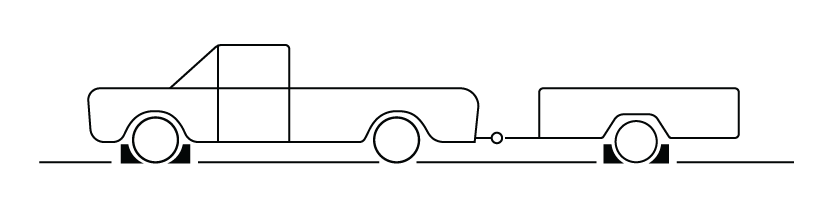
- Make sure to use chocks specifically designed for the type of vehicle you are driving, never use a make shift chock, including but not limited to, lumber, bricks or rocks.
- Maintenance and construction vehicles, and trucks under 1 ton, must be equipped with one approved wheel chock.
- Trucks over 1 ton, single-axle trailers, and towed vehicles require a minimum of two wheel chocks.
- Chocks must be used on any unattached, parked trailer, regardless of the slope of the surface.
- Chocks must be used on any vehicle equipped with a boom that is elevated, regardless of sloping surface. On level surfaces, place chocks in front of and behind one wheel.
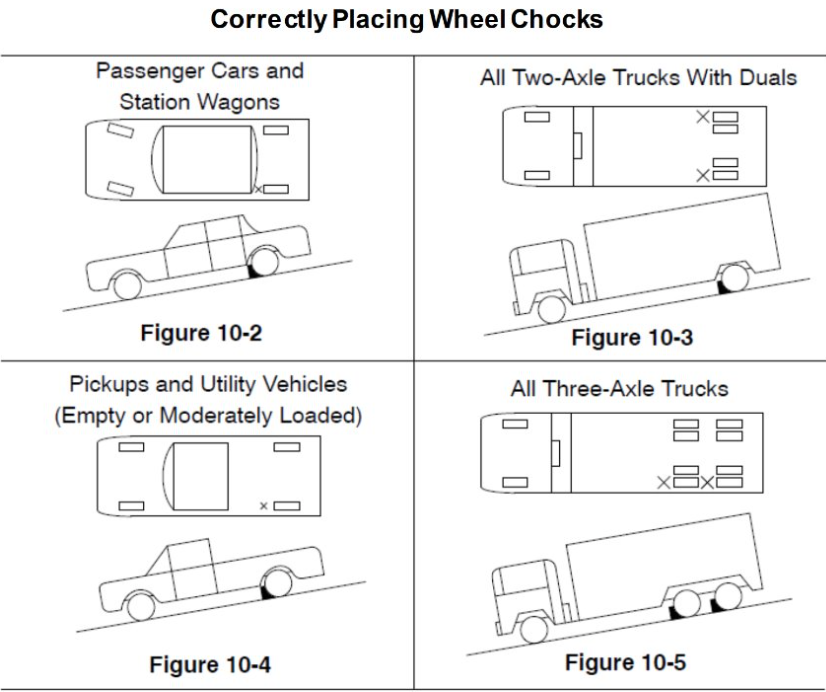
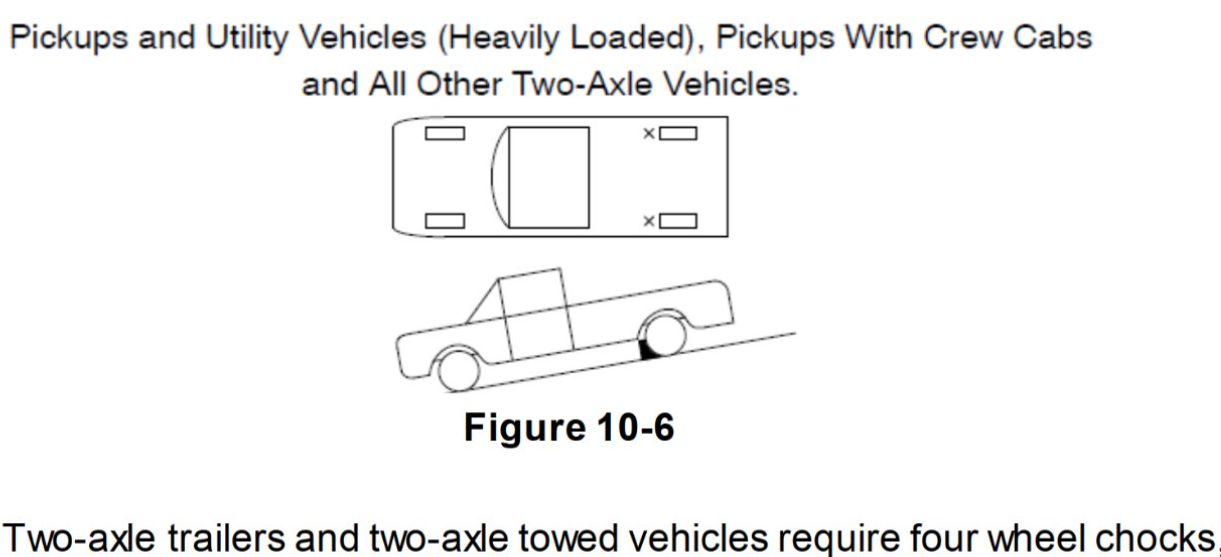
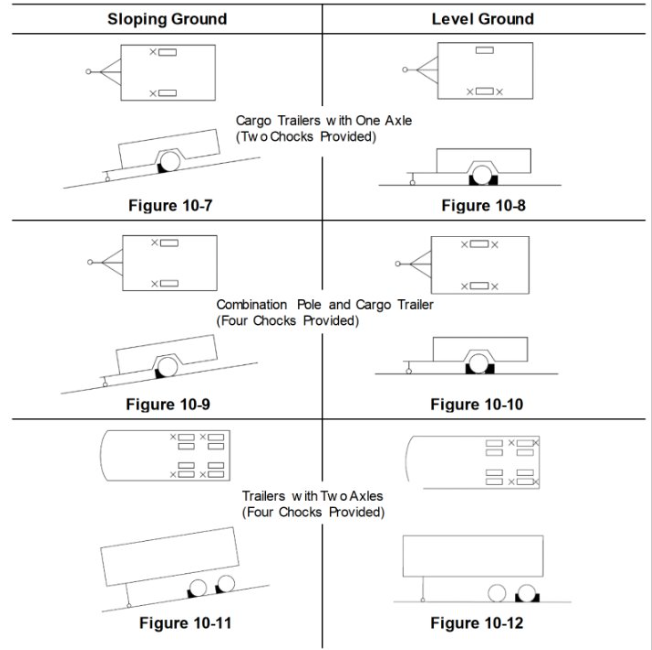
- MGE Underground employees shall deploy chocks on trailers when detached as well as when the trailer is being loaded or unloaded.
- Wheel chocks shall be used when vehicles such as bucket trucks, digger derricks, and the like have their outriggers and/or booms deployed.
- Wheel chocks shall be made available to employees whom find the need to use wheel chocks for any vehicle while in steep terrain or for general use outside of the predefined scope.
- Drivers of vehicles 10,001 lbs. GVWR and greater must always use wheel chock blocks in addition to setting the appropriate parking system to secure the vehicle and turning the ignition off. For single-axle vehicles 10,001 lbs. GVWR and greater, a minimum of two wheel chocks are required.
- Operators of equipment (e.g., trailers, tractors, backhoes, loaders, etc.) must (as appropriate for the equipment) ensure front buckets and/or auxiliary buckets and outriggers are down to secure the equipment or use wheel chock blocks.
- If the equipment does not have adequate means to secure and prevent roll-away, wheel chocks are required.
- Wheel chocks are not a CSP requirement for vehicles below 10,001 GVWR, which include passenger vehicles, sport utility vehicles and pick-up trucks (3/4 ton or less with a regular truck bed).
- Make sure to use chocks specifically designed for the type of vehicle you are driving, never use a make shift chock, including but not limited to, lumber, bricks or rocks.
- Maintenance and construction vehicles, and trucks under 1 ton, must be equipped with one approved wheel chock.
- Trucks over 1 ton, single-axle trailers, and towed vehicles require a minimum of two wheel chocks.
- Vehicles towing a trailer are require a minimum of two chocks for the truck and two chocks for the trailer.
- Chocks must be used on any unattached, parked trailer, regardless of the slope of the surface.
- Chocks must be used on any vehicle equipped with a boom that is elevated, regardless of sloping surface. On level surfaces, place chocks in front of and behind one wheel.
Variables
- Wheel Size: Smaller tire diameters require smaller chocks, while larger ones require larger chocks.
- Gross Vehicle Operating Weight: Heavier vehicles require larger chocks than lighter vehicles.
- Level or Grade of the Ground Surface: Chocks need to be positioned in different ways depending on if the ground is level or not. Ensuring that the chocking configuration is correct based on surface grade is paramount for proper chocking.
- Radial Tires vs. Bias-Ply Tires: Radial tires deflect more than bias-ply tires. While this flexibility allows the vehicle to move more smoothly, it also allows the tire to wrap around the wheel chock, which reduces the chock’s effectiveness.
- Tire Pressure Variance due to Environment: It is important to monitor tire pressure, especially in harsh environments. Improperly inflated tires can lead to chocking failures.
- Condition of the Ground Surface: Whether the ground is firm, soft, wet, dry, icy, or frozen is a key determination in the type of chock to use. For frozen or icy terrains, choose a chock with a cleated bottom. For severely wet or muddy terrains, multiple chocks may be necessary to ensure safe chocking.
Identifying the GVWR
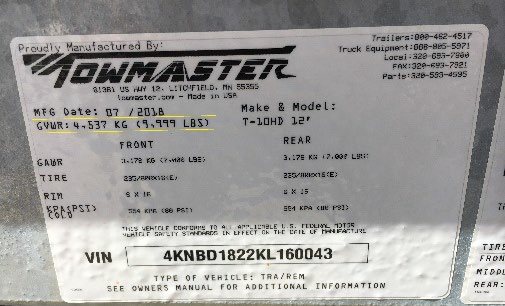
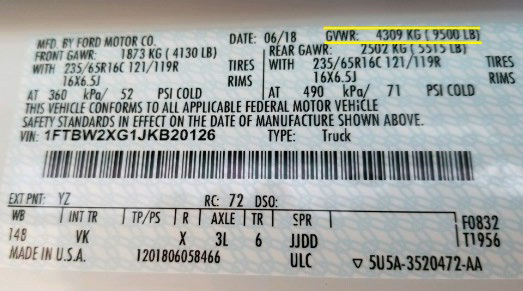
- Every on-road vehicle has a manufacturers’ data placard that indicates the gross vehicle weight rating (GVWR), as well as other vehicle information.
- The GVWR is the maximum operating weight of a vehicle, as specified by the manufacturer.
- The GVWR includes the vehicle’s chassis, body, drivetrain, fluids, fuel, driver, passengers, tongue weight, accessories, and cargo.
- For passenger vehicles and trucks, the manufacturer data placard can be found on the driver’s door jamb.
- Trailer manufacturers normally install the placard on the drawbar or tongue area. The location of the placard can differ by trailer manufacturer. Below are examples of the manufacturer’s data placard from a truck and a trailer.
Wheel Chock Position
- Always ensure the chock is centered and squared with the tire.
- Position the chock snuggly against the tire tread.
- Always use wheel chocks in pairs.
- Wheel chocks must be positioned downhill and below the vehicle’s center of gravity.
- On a downhill grade, position the chocks in front of the front wheels.
- On an uphill grade, position the chocks behind the rear wheels.
- On a level grade, position the chocks on the front and back of a single wheel
E. Maintenance
No maintenance required for this tool.