
I. Purpose & Scope
To safely and effectively provide instruction on the inspection and proper use of wheel chocks.
II. Definitions
Standard PPE – High Viz Garment, Hard Hat, Z-87.1 Safety Glasses, Gloves, Pants, Work Boots
III. Process
NOTE: Work instruction does not supplement the manual. For specific instructions for the exact model please refer to the owner’s manual.
A. Potential Hazards
- Moving Objects Hazard
B. PPE
- Standard PPE
C. Inspection
- Check for cracks, breaks or falling apart. Replace immediately if damaged.
D. Use
- When possible park vehicle on a level surface and set the parking brake.
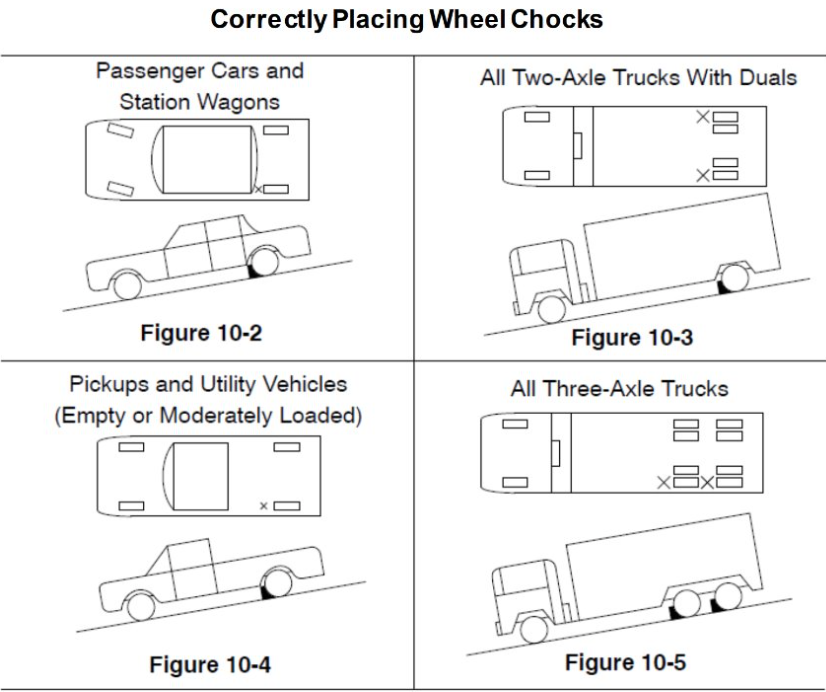
- Always use wheel chocks in pairs, and position the chocks snuggly against the center of tire against the tread.
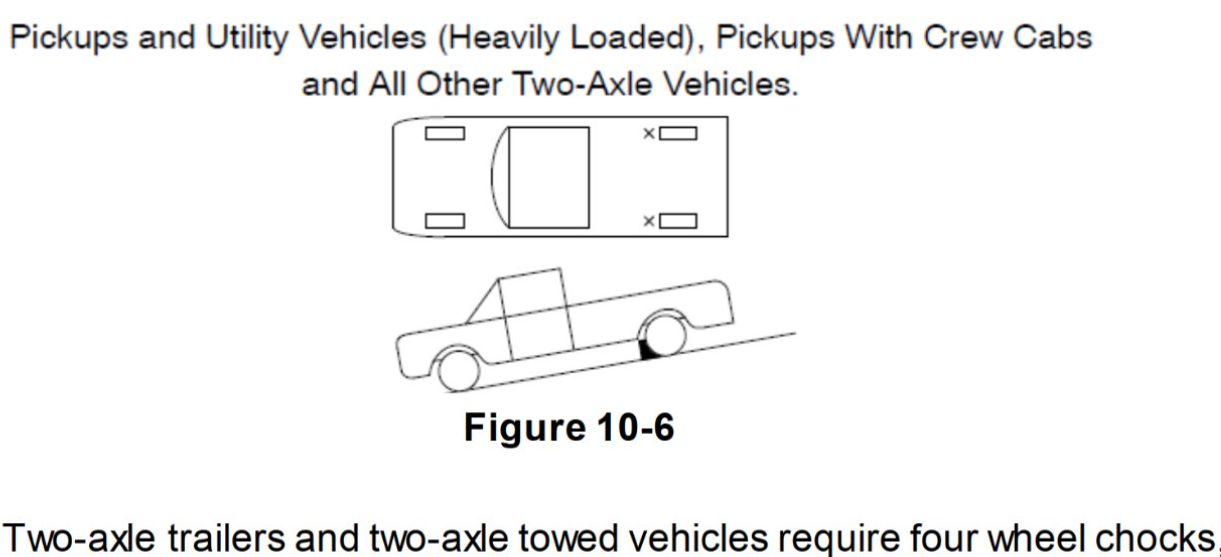
- Wheel chocks must be positioned downhill and below the vehicle’s center of gravity.
- On a downhill grade, position the chocks in front of the front wheels.
- On an uphill grade, position the chocks behind the rear wheels.
- On a level grade, position the chocks on the front and back of a single wheel.
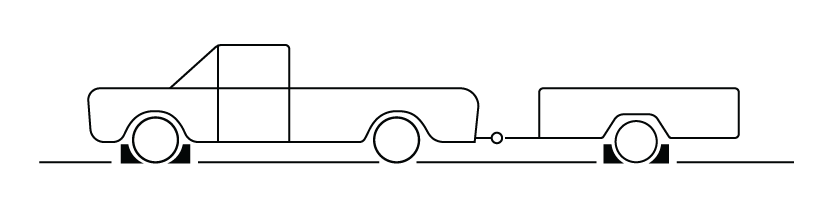
- Vehicles towing a trailer are require a minimum of two chocks for the truck and two chocks for the trailer, position each set at the front and back of a single wheel.
- Make sure to use chocks specifically designed for the type of vehicle you are driving, never use a make shift chock, including but not limited to, lumber, bricks or rocks.
- Maintenance and construction vehicles, and trucks under 1 ton, must be equipped with one approved wheel chock.
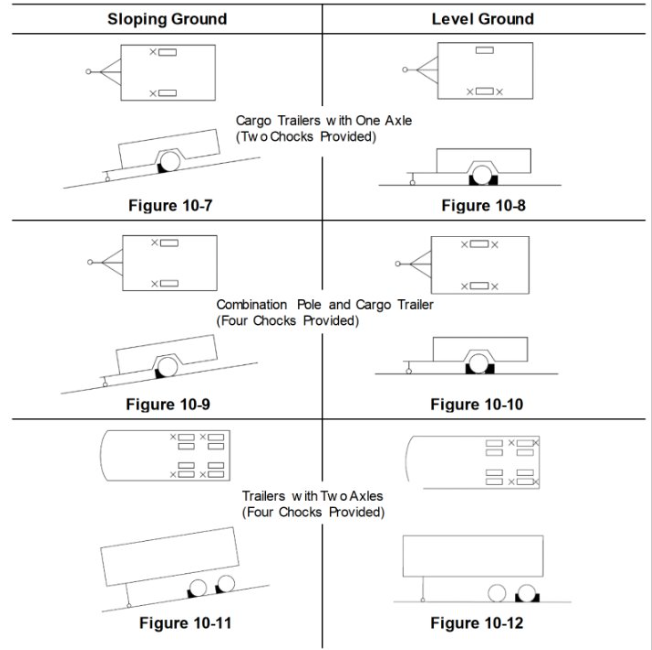
- Trucks over 1 ton, single-axle trailers, and towed vehicles require a minimum of two wheel chocks.
- Chocks must be used on any unattached, parked trailer, regardless of the slope of the surface.
- Chocks must be used on any vehicle equipped with a boom that is elevated, regardless of sloping surface. On level surfaces, place chocks in front of and behind one wheel.
E. Maintenance
No maintenance required for this tool.