
I. Purpose & Scope
To safely and effectively provide instruction on the inspection and proper use of socket wrenches.
II. Definitions
Standard PPE – High Viz Garment, Hard Hat, Z-87.1 Safety Glasses, Gloves, Pants, Work Boots
III. Process
NOTE: Work instruction does not supplement the manual. For specific instructions for the exact model please refer to the owner’s manual.
A. Potential Hazards
- Slipping Hazard
- Stress or Strain Hazard
- Flying Debris Hazard
B. PPE
- Standard PPE
C. Inspection
- Ensure ratchet works correctly by hand turning the ratchet back and forth from left to right several times.
- Ensure tool and socket are not damaged, cracked or dirty.
- Check tool for rounded or damaged wrench openings, or worn or deformed drive ends. Discard if damaged.
D. Use
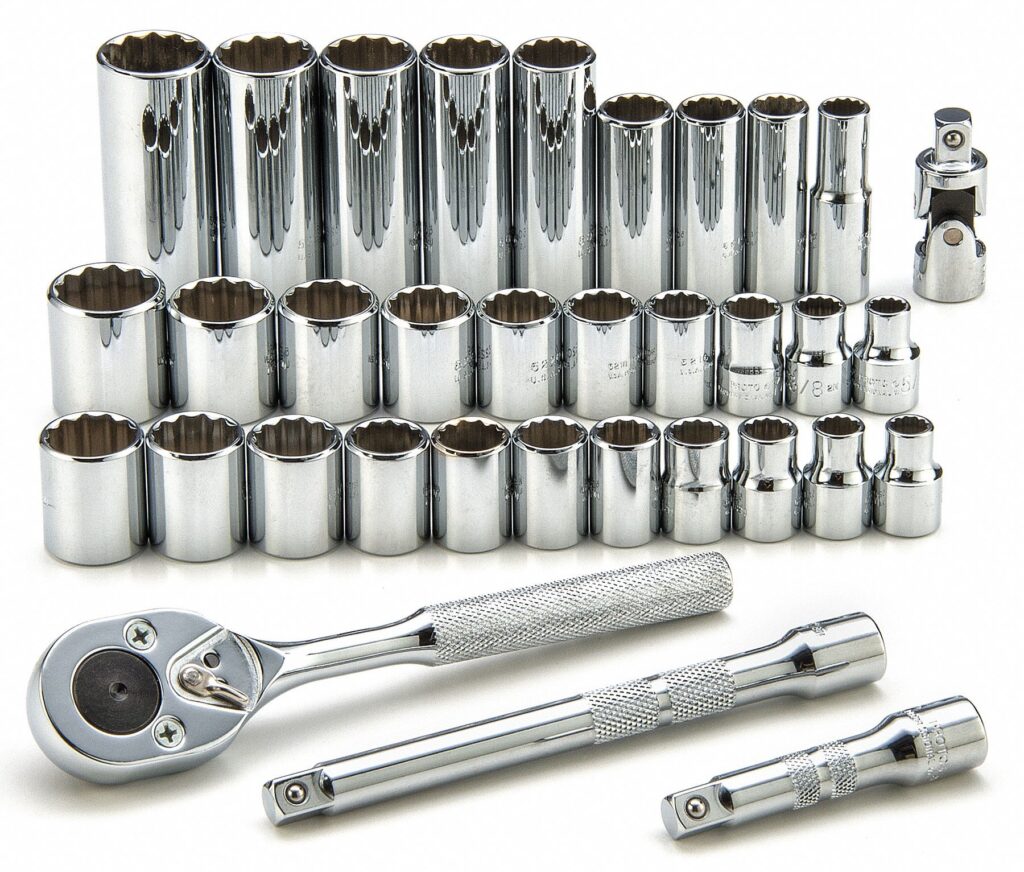
- Select size and type of socket to fit nut.
- Select the larges possible drive size.
- Select appropriate handle.
- Select extension and joint.
- Set the wrench’s lever to set the ratchet direction. Put it to the left if you’re tightening the fastener or to the right if you’re loosening the fastener.
- Fit the socket over the nut and turn the handle clockwise or counter clockwise to tighten or loosen the fastener.
- Keep the socket on the nut or bolt, and move the wrench handle back to the starting position.
- Press the large button down on the back of the wrench and gently pull the socket straight down to remove the socket.
Avoiding Misuse
- Never increase the leverage of a wrench handle by use of a pipe or other form of cheater on the wrench handle.
- Never use hand sockets on power drive or impact wrenches.
- When using adapters, remember that when adapting “down” you build up torque potential.
- When adapting “up” there is a risk of applying too much force to the handle and it may break.
E. Maintenance
- Periodically clean the handles, sockets and attachments.