
I. Purpose & Scope
To safely and effectively provide instruction on the inspection and proper use of pressure washers.
II. Definitions
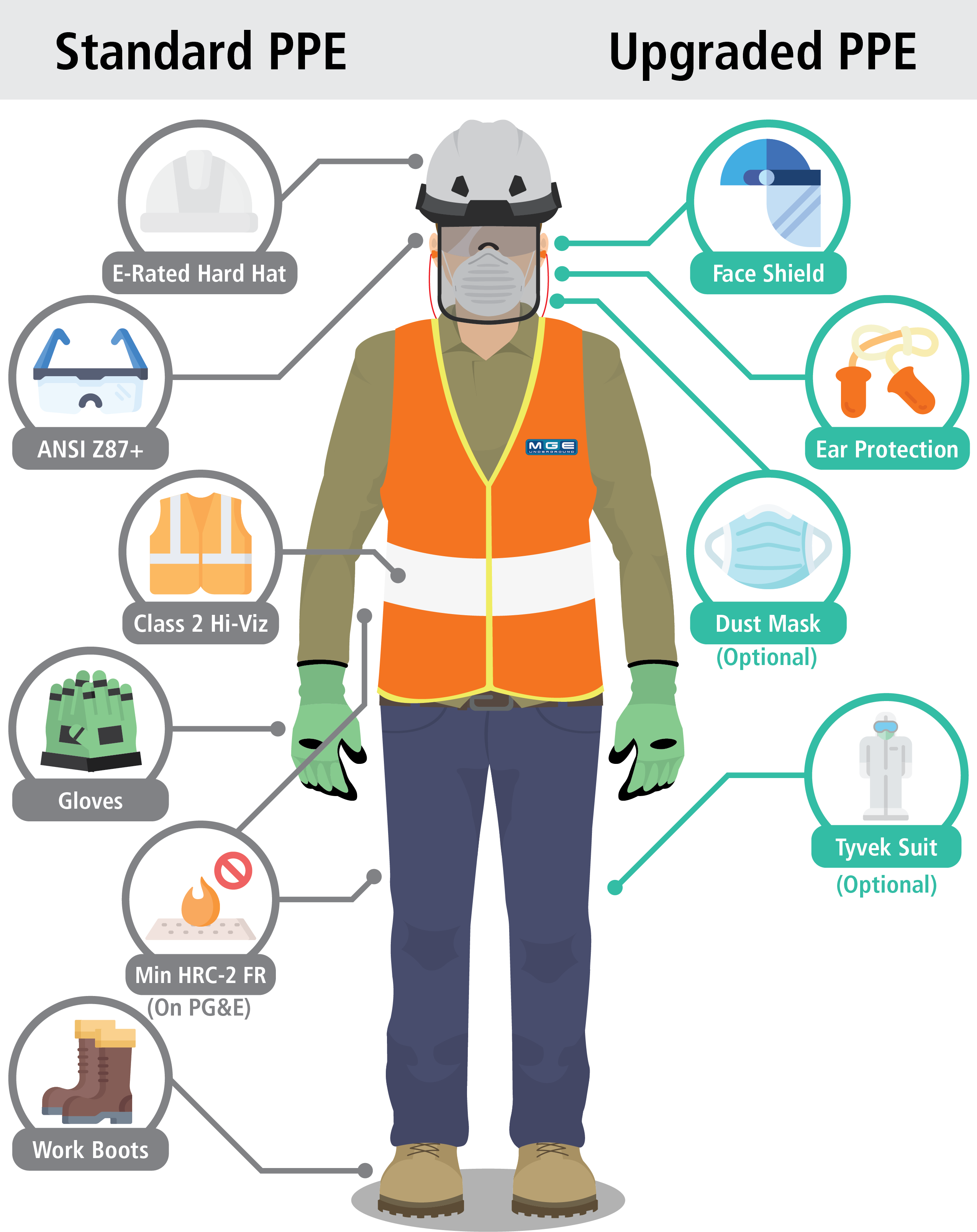
Standard PPE – High Viz garment, Hard Hat, Z-87.1 Safety Glasses, Gloves, Pants, Work Boots
III. Process
NOTE: Work instruction does not supplement the manual. For specific instructions for the exact model please refer to the owner’s manual.
A. Potential Hazards
- Fire and or Explosion hazard
- Electrocution or Electrical Shock Hazard
- Asphyxiation Hazard
- Injection or Severe Cutting Hazard
- Burn Hazard
- Flying Debris Hazard
- Slip, Trip, Fall Hazards
B. PPE
- Standard PPE
- Face Shield
- Hearing Protection
- Respiratory Protection – Recommended
- Rain Gear or Tyvek Suit – Recommended
C. Inspection
- Check the oil level in the pump and engine.
- Inspect the water inlet strainer. Clean or replace if necessary.
- Check all hose connections to ensure they are securely tightened.
- Inspect for system water leaks, oil leaks and fuel leaks. If a fuel leak is found, turn unit off immediately. Be sure that all damaged parts are replaced and that the mechanical problems are corrected prior to operation of the unit.
- Unravel the entire length of the hose and inspect for kinging, cuts, and leaks. If a cut or leak is found, do not touch hose at leak. Turn unit off Immediately. Replace hose before restarting the unit. Be sure that all damaged parts are replaced and that the mechanical problems are corrected prior to operation of the unit.
- Check hose inlet for cleanliness, clean the connection if covered in dirt or debris.
D. Use
Connecting the Wand
- Ensure the water inlet valve is closed.
- Pull back the quick connection fitting and insert hose onto the wand.
- Ensure the connection fitting locks and connected tightly.
NOTE: Never use the wand and nozzle as a digging tool, keep the tip out of the excavation material.
Start-up/Cold Water Operation
- Ensure the burn switch is in the “OFF” position.
- Follow the steps below for the water system start up:
- Turn the key to the “on” position.
- Allow the system to prime for 5-6 seconds.
- Turn the key to the “start” position.
- Ensure the tank inlet valve is open.
- Turn the pressure washer switch “on”.
- Check for system water leaks, oil leaks and fuel leaks, then inspect high pressure hoses for kinking, cuts and leaks.
- Trigger the gun several times and adjust the water pressure to the correct utility specification requirements. Never place hand or fingers in front of the nozzle or look directly into the nozzle. High pressure water creates a risk of severe injury.
- Do not allow unit to operate in bypass mode (with trigger closed) for more than three minutes without triggering the gun. Failure to follow this simple rule can cause premature failure of pump packings, resulting in costly pump repair.
Shut-Down
- Move the Burner Switch to the “OFF” position.
- Squeeze the trigger and discharge the water for a period of three minutes to cool the heat exchanger and high pressure hose. (Insufficient cool down period of the high pressure hose will cause excessive wear and eventual rupturing of the hose).
- Do not close the chock to stop the engine. Backfire or engine damage may occur. Turn the engine “OFF”.
- Close the engine fuel shut-off valve.
- Turn the water supply “OFF”.
- Pointing the gun in a safe direction, trigger the gun momentarily to relieve trapped pressure.
- Disconnect and drain the nozzle assembly, gun, wand, and hoses.
- Pull the hose fully out to roll up back into the hose housing.
E. Maintenance
- Clean strainers before starting your pressure washer.
(Performed by Authorized Personnel Only)
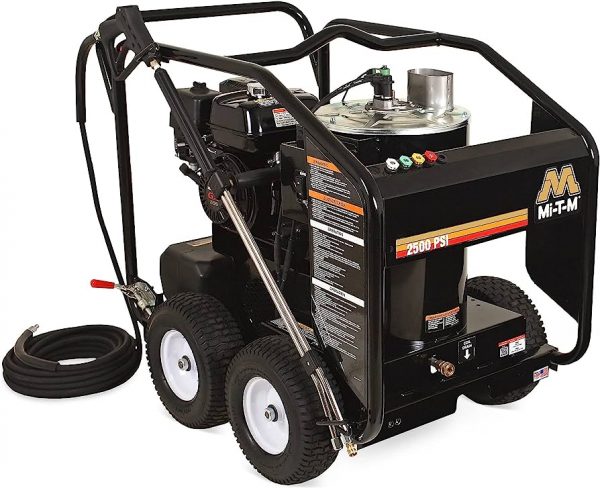
Manufacturer: Mi-T-M
Model: HSP-Series
| Potential Energy Hazards | Method of Neutralizing Energy | Permits Required |
|---|---|---|
 Electric Air Electric Air |  LOTO Disconnect lines LOTO Disconnect lines | Safe work |
| Pneumatic Gravity | Block/bleed Release pressure | Hot work |
| Mechanical Gas | Set fire watch Confined space permit | Line blanking |
| Hydraulic Water | Confined space |
Lockout (Shut-Down Procedure)
- Notify all affected personnel.
- Turn off unit.
- Relieve water pressure.
- Allow unit to cool down.
- Lockout the hose connection.
Start-up Procedure
- Notify all affected personnel that equipment is operational and removal of lockout will occur.
- Remove all tools, equipment and debris from the area.
- Remove lockout from the hose connection.
- Attach hose fitting, turn on unit and test equipment.