
I. Purpose & Scope
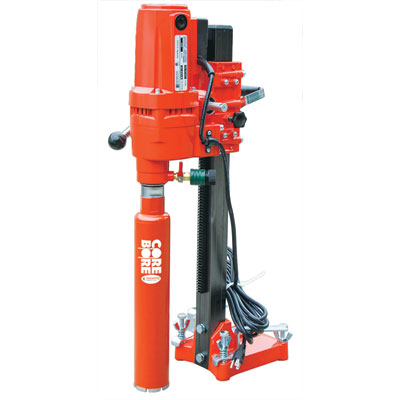
To safely and effectively provide instruction on the inspection and proper use of core drills.
II. Definitions
Standard PPE – High Viz Top, E Rated Hard Hat, Z-87.1 Safety Glasses, Gloves, Pants, Work Boots
III. Process
NOTE: Work instruction does not supplement the manual. For specific instructions for the exact model please refer to the owner’s manual.
A. Potential Hazards
- Flame and/or Explosion hazard
- Electric Shock hazard
- Slip, Trips, Falls
- Cut hazards
- Noise hazards
- Flying Objects hazards
- Hazardous Atmosphere
B. PPE
- Standard PPE
- Hearing Protection
- Respiratory Protection – Recommended
C. Inspection
- Inspect guards, switches, tool cord set and extension cord for damage.
- Check for loose screws, misalignment, binding of moving parts, improper mounting, broken parts and any other condition that may affect its safe operation.
D. Use
Selecting and Installing Core Bit
- To install a bit, grease the spindle and bit threads to prevent corrosion and to help prevent the bit from seizing on the threaded spindle.
- Slip one copper washer onto the threaded spindle against the spindle shoulder.
- Thread the bit securely onto the threaded spindle.
Selecting Speeds
- Use low speed for large diameter bits and high speed for small diameter bits.
Coring Procedure
- Select and install a bit following guidelines in “Selecting and Installing a Core Bit”.
- Secure the rig to the work surface using one of the methods described in “Methods for Securing Equipment to Work Surface”.
- With the motor OFF, adjust the gear to either high or low speed according to the guidelines in “Selecting Speeds”.
NOTE: DO NOT SHIFT SPEEDS WHEN THE DYMODRILL MOTOR IS ON. To adjust the speed on all Dymodrills, move the gear shift lever to the desired setting. - Connect the water hose to the Dymodrill water shut-off valve and to the water supply. Make sure the seal is watertight. Use a standard garden hose if you require additional length. Set up a water collection system.
- If you are using a vacuum system, read the instructions for specific setup in “Assembling& Using a Vacuum System”. Do not continue the following steps until the vacuum gauge reads at least 20 inches of mercury vacuum. Never operate the Dymodrill if the gauge reads less than 20 inches. Always monitor the vacuum gauge during coring. If water collects in the vacuum pump filter jar, empty it to prevent damage to the pump.
- Turn the Dymodrill motor ON. Turn the water on so it flows freely through the water shut-off valve (see “Supply an Adequate Water Flow”).Turn the valve clockwise to increase water flow and counterclockwise to decrease water flow.
- While holding the handle, slightly loosen the cradle lock handle and slowly rotate the handle to lower the bit into the workpiece, applying steady, even pressure. To help reduce bit wandering, always use a light load to start the hole and wait for the tip of the bit to penetrate the work surface completely before increasing the load.
- Use sufficient pressure so the bit cuts constantly. Use the ammeter on the meter box as a guide for proper pressure.
NOTE: If the rig shifts during coring, stop the motor, reposition the rig and resume coring. - Monitor the water flow (see “Diamond Coring”).Generally, water should fl ow at a rate of approximately one to two gallons per minute. If the water fl ow is too heavy, the two holes in the water swivel housing will leak. If that happens, reduce water fl ow. Water fl ow is adequate when the water and cuttings are flushed in a circular pattern about 1/2″ around the bit. Keep the work area dry.
- When the cut is complete, keep the drill motor ON and rotate the handle clockwise to remove the bit. The bit may become stuck in the hole if you turn the motor OFF before the bit is completely removed. Once the bit is removed from the work surface, turn the motor OFF. Tighten the cradle lock handle. Unplug the meter box from the power supply before removing the vacuum pump to prevent accidental starting of the motor when the vacuum pump is released. If you are using a vacuum pump, unplug it and open the vacuum release valve to release the vacuum.
Methods for Securing Equipment to Work Surface
- Using an Expansion-Type Anchor (For Catalog No 4125 & 4130 only).
- Use a 5/8″ expansion-type anchor (not supplied) that will accept a 5/8″ threaded rod or bolt to secure the base to the work surface.
- Level the stand with the four (4) leveling screws using the bubble level as a guide. When the stand is level, tighten the four (4) nuts on the leveling screws.
- Using an expansion-type anchor, insert a threaded rod or bolt through the slot located on the base of the Dymorig and tighten the bolt or washer and nut firmly in the anchor following the anchor manufacturer’s instructions.
- Using an Expansion-Type Anchor (For Catalog No. 4115 & 4120 Only).
- Use a 5/8″ expansion-type anchor (not supplied) that will accept a 5/8″ threaded rod or bolt to secure the base to the work surface.
- Remove the rubber gasket from the base.
- Level the rig with the four (4) leveling screws.
- Using an expansion-type anchor, insert a threaded rod or bolt through the slot located in the base of the Dymorig and tighten the bolt or washer and nut firmly in the3 anchor following the manufacturer’s instructions.
- For Vacuum System and Assembly see operator’s manual.
Retrieving Cores and Deep Coring
- Begin coring the hole as usual. When you have cored to the length of the bit, stop the Dymodrill motor.
- Remove the core by driving a chisel or slender wedge into the cut between the core and the work surface. You may also use a special core tongs, bent wire or anchor bolts to remove the core.
- After removing the core, reinsert the bit or use a bit extension and continue coring (see “Accessories”). Removing cores with diameters greater than twice their length can be difficult. One method to remove such cores is to first break the core into smaller pieces and then remove the pieces. Electric hammers and chisels are ideal for breaking cores.
Operator Technique
- Core with consistent, firm feed pressure. Do not subject the bits to sudden impacts. Uneven feed rate cracks diamonds. Low feed pressure polishes diamonds, slows penetration and contributes to bit glazing. High feed pressure can overload the drill motor or can cause diamonds to pull out prematurely, particularly when coring embedded steel. Make the bit work but do not try to jam the bit through the material.
- If vibration occurs:
- Stop drilling
- Turn motor off
- Check for loose bolts, nuts and gib screws. Tighten if required.
- Check for bit runout. Replace if required.
- If vibration continues to occur, remove the core and loose material.
- If vibration continues to occur after attempting these measures, red tag and remove from use.
E. Maintenance
- Clean machine after each use with mild soap and a damp cloth.
- Keep cutting tools sharp and clean.
F. Live Line Contact
- Immediately stop work.
- Treat equipment, attachments and ground as energized.
- Warn people nearby that an electric strike has occurred.
- DO NOT exit equipment and stay inside cab while contact or arcing is occurring.
- Ensure equipment is barricaded.
- If there is an immediate hazard (i.e. fire hazard) that requires the exiting of equipment employee shall jump out of equipment with both feet together, landing on the ground.
- Employee shall than shuffle away from equipment, not walk or run, taking small steps and feet together to minimize voltage difference in the ground until they reach a safe location.